

Description
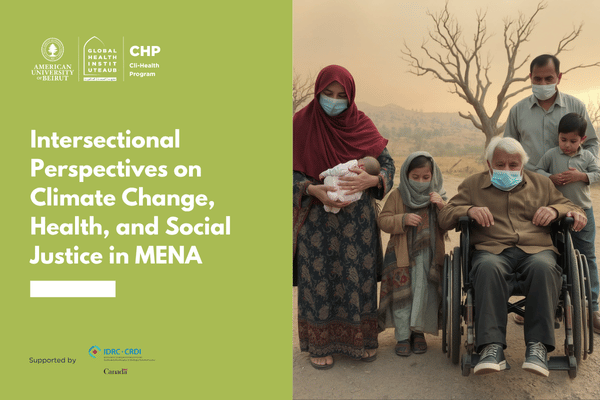
This course offers an in-depth exploration of the intersection between climate change, health, and social justice in the Middle East and North Africa (MENA) region. Learners will explore the concept of intersectional systems of inequality and discrimination, analyzing how these structures shape the disproportionate health impacts of climate change and related risks on vulnerable communities, assuming that groups might be impacted differently. It delves into the ways climate-induced challenges exacerbate health disparities, disproportionately affecting marginalized groups. Learners will engage in readings and activities focusing on marginalized and underrepresented populations, including women, refugees and migrants, minorities, low-income communities, Internally Displaced People, and People with Disabilities among others.
The course adopts an interdisciplinary approach, combining insights and tools from environmental science, global health, social justice, gender and feminist studies, public policies, and human rights. While it incorporates global perspectives, the course remains rooted in the specific realities, priorities, experiences/history, and interconnected challenges of the MENA region.
By the end of this course, learners will be equipped with the knowledge and tools required to establish a foundational knowledge on key concepts and understand the complex interplay between climate risks, health disparities, and social inequities. Learners will also be prepared to critically assess and engage with and contribute to climate-health initiatives and social justice movements that promote health equity and climate resilience in their communities.