


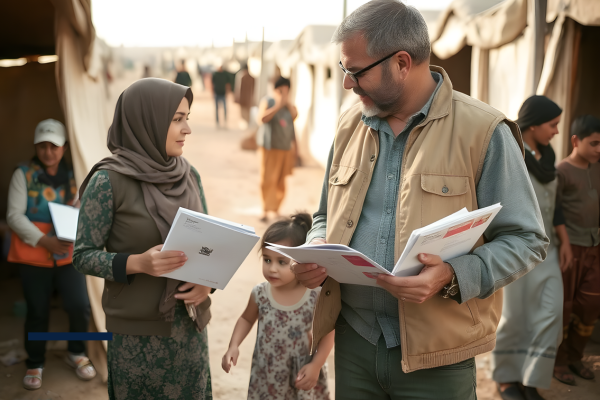
This course provides a practical introduction to Monitoring, Evaluation, Accountability, and Learning (MEAL) in humanitarian and development programs. It covers core MEAL concepts and methods, including results frameworks, data collection and quality, ethics, accountability to affected populations, digital tools such as KoboToolbox, and emerging topics like AI and automation. The course is designed mainly for junior humanitarian and NGO practitioners, fresh graduates, and students seeking to enter the field, as well as professionals who want to strengthen their MEAL skills. It is also suitable for individuals working in related development or social sector contexts. By the end of the course, learners will be able to design basic MEAL frameworks, collect and analyze data responsibly, and use evidence to support accountability, learning, and decision-making in real-world programs.
This course is designed for professionals involved in humanitarian and development programming who are engaged in monitoring, evaluation, accountability, and learning functions across projects and operations.
Develop the ability to structure monitoring and evaluation systems for humanitarian programs.
Apply results-based frameworks to plan and assess humanitarian interventions.
Strengthen the ability to monitor progress and measure program effectiveness.
Analyze monitoring data to support informed decision-making.
Enhance capacity to ensure transparency and reporting in humanitarian programming.
Translate evaluation findings into program improvements and decision-making.
Enrollment is available on a rolling basis.
Participants may enroll in this course individually as part of their professional development in humanitarian programming monitoring and evaluation. Credits earned from this course are fully applicable toward the Humanitarian Leadership Diploma. Learners are also encouraged to explore the full diploma pathway, which provides a structured learning track across key domains of humanitarian leadership, management, and operations.
Enroll NowThe Institutional Learning Package (ILP) is designed for organizations aiming to empower their teams through flexible, self-paced learning. It offers reduced fees for bulk registrations and provides institutions with real-time access to course progress metrics, enabling effective monitoring of learners' progress.
Tailored capacity-building courses, workshops, and training offerings in the humanitarian sector are available to meet the specific needs of organizations and institutions. These programs are co-designed to align with organizational priorities, operational contexts, and workforce development objectives. They may include adapted course content, blended learning formats, and customized training approaches, including language of instruction, delivery modality, and thematic focus.