


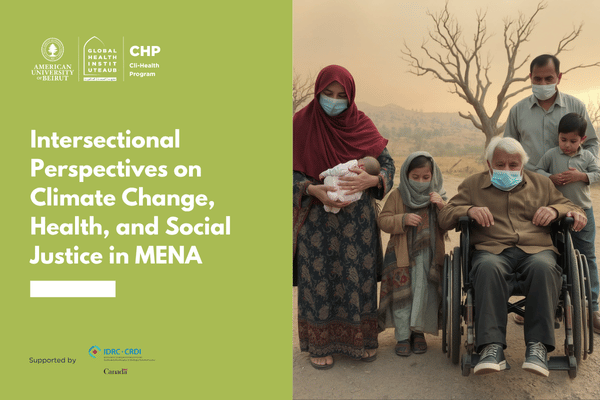
This course explores the intersection of climate change, health, and social justice in the Middle East and North Africa (MENA), examining how systems of inequality and discrimination shape the disproportionate health impacts of climate change on vulnerable and marginalized communities. Through readings and activities, learners will explore how climate-related challenges affect populations differently, including women, refugees and migrants, minorities, low-income communities, internally displaced people, and people with disabilities.
The course takes an interdisciplinary approach, drawing on environmental science, global health, social justice, gender and feminist studies, public policy, and human rights. While incorporating global perspectives, it remains grounded in the specific realities, priorities, and interconnected challenges of the MENA region. By the end of the course, learners will understand the complex interplay between climate risks, health disparities, and social inequities. Learners will be able to critically assess and contribute to climate-health and social justice initiatives that promote health equity and climate resilience.
Emerge with concrete strategies, an internationally recognized credential, and the practical skills to drive preparedness at your institution or ministry.
Enrollment is available on a rolling basis.
Participants may enroll in this course individually or as part of the full Certificate in Climate Change and Health.
Enroll NowThe Institutional Learning Package (ILP) is designed for organizations aiming to empower their teams through flexible, self-paced learning. It offers reduced fees for bulk registrations and provides institutions with real-time access to course progress metrics, enabling effective monitoring of learners' progress.
Tailored capacity-building courses, workshops, and training offerings in the humanitarian sector are available to meet the specific needs of organizations and institutions. These programs are co-designed to align with organizational priorities, operational contexts, and workforce development objectives. They may include adapted course content, blended learning formats, and customized training approaches, including language of instruction, delivery modality, and thematic focus.