


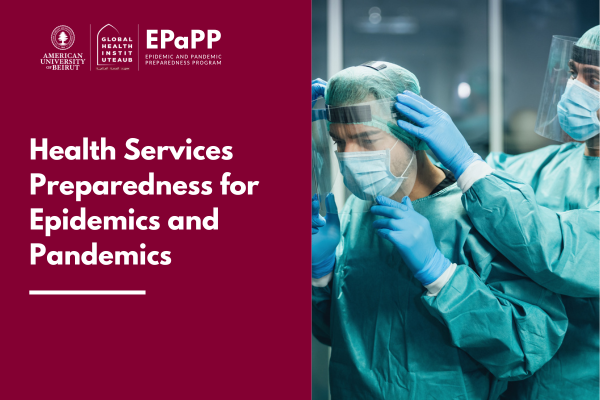
This course provides learners with the knowledge and skills needed to prepare health services for pandemic threats in the MENA region. It offers an in-depth exploration of the recognition, containment, and management of health threats, as well as the communication strategies required during public health emergencies. The course emphasizes the role of various healthcare stakeholders including ministries of health, government institutions, healthcare providers, and frontline professionals and it fosters a systems-based understanding of pandemic preparedness. Learners will gain practical insights into building resilient healthcare systems capable of responding to the growing risks posed by globalization, urbanization, and climate change.
Designed specifically for the MENA region, this certificate addresses critical educational and training gaps to strengthen regional readiness and response capabilities.
Demonstrate knowledge of infection control and healthcare workforce preparedness strategies to effectively manage and contain pandemics
Understand managing healthcare services and resources during pandemics to ensure resilience and long-term sustainability
Effectively communicate with stakeholders to promote coordinated pandemic responses
Understand the strategies required to build and sustain resilient health systems for responding to future pandemics
Enrollment is open year-round. Participants can enroll in this course independently or as part of a full certificate program.
The Institutional Learning Package (ILP) is designed for organizations aiming to empower their teams through flexible, self-paced learning. It offers reduced fees for bulk registrations and provides institutions with real-time access to course progress metrics, enabling effective monitoring of learners' progress.
Tailored capacity-building courses, workshops, and training offerings in the humanitarian sector are available to meet the specific needs of organizations and institutions. These programs are co-designed to align with organizational priorities, operational contexts, and workforce development objectives. They may include adapted course content, blended learning formats, and customized training approaches, including language of instruction, delivery modality, and thematic focus.
Enrollment is open year-round. Start at your own pace, on your own schedule.
Enroll Now